

International Pizza Day
on making a (very serious) holiday from scratch
When my oldest child was five, early in 2006, we read Pizza for the Queen by Nancy Castaldo. It’s a simple story: Raffaele, a Neapolitan baker, learns one morning in 1889 that Queen Margherita wants him to make her a pizza. He spends the day shopping for ingredients, feeding his customers, and, ultimately, inventing a pie featuring red, white, and green toppings in honor of the Italian flag.
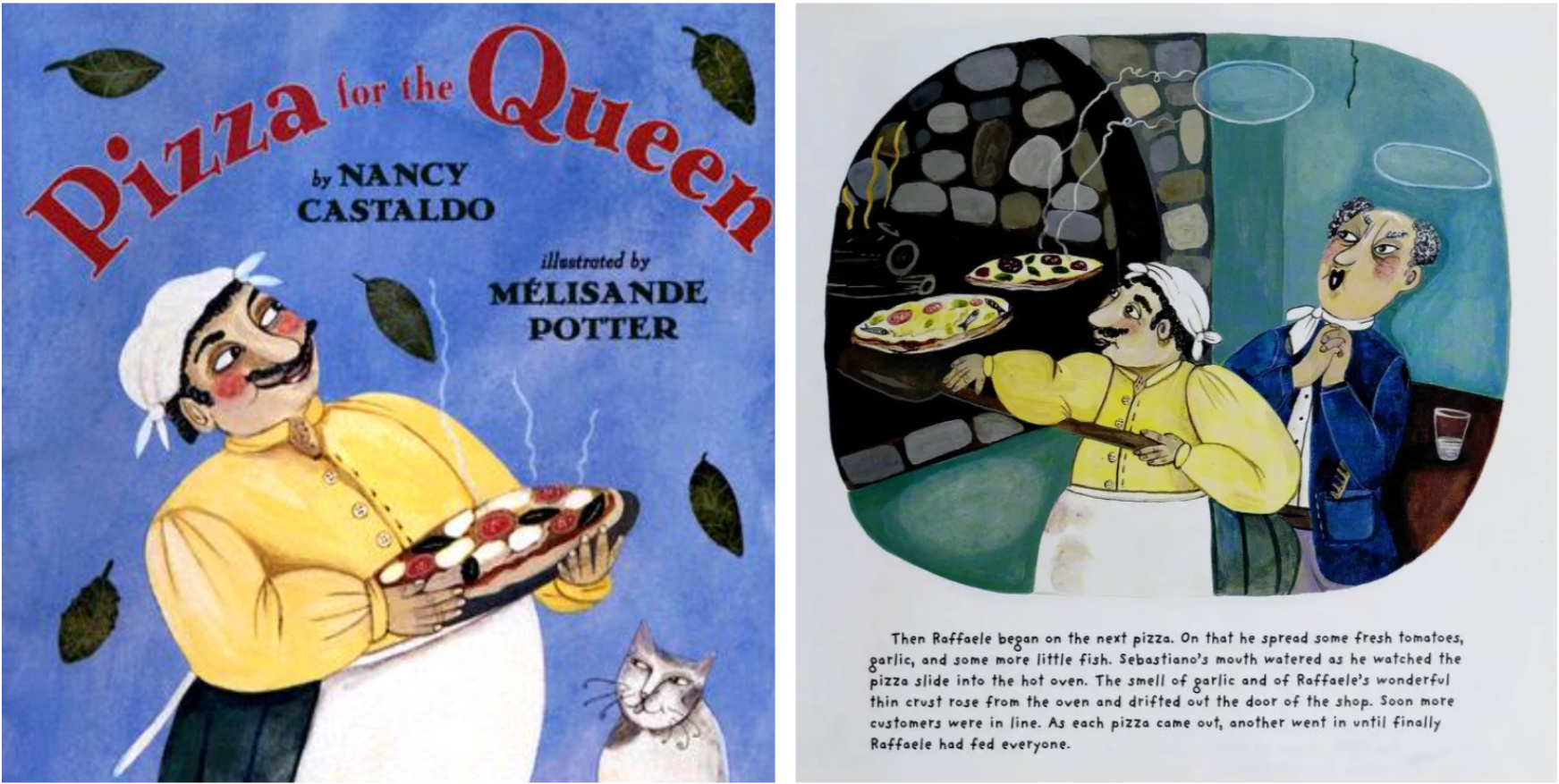
The book ends with a recipe for Pizza Margherita, followed by this note: “If you need a reason to have a slice of pizza, February 9 has been declared International Pizza Day.”
We didn’t need a reason to have pizza, but we did need something to do. We always needed something to do. Having little kids makes you desperate for Activities, and celebrating International Pizza Day by making our own pizzas was an Activity located firmly inside my maternal strike zone.1 And February 9 was just five days away.
So the first year we celebrated International Pizza Day, it was just a thing to do with the kids. I made the dough, and we each picked our toppings for our personal pizzas.
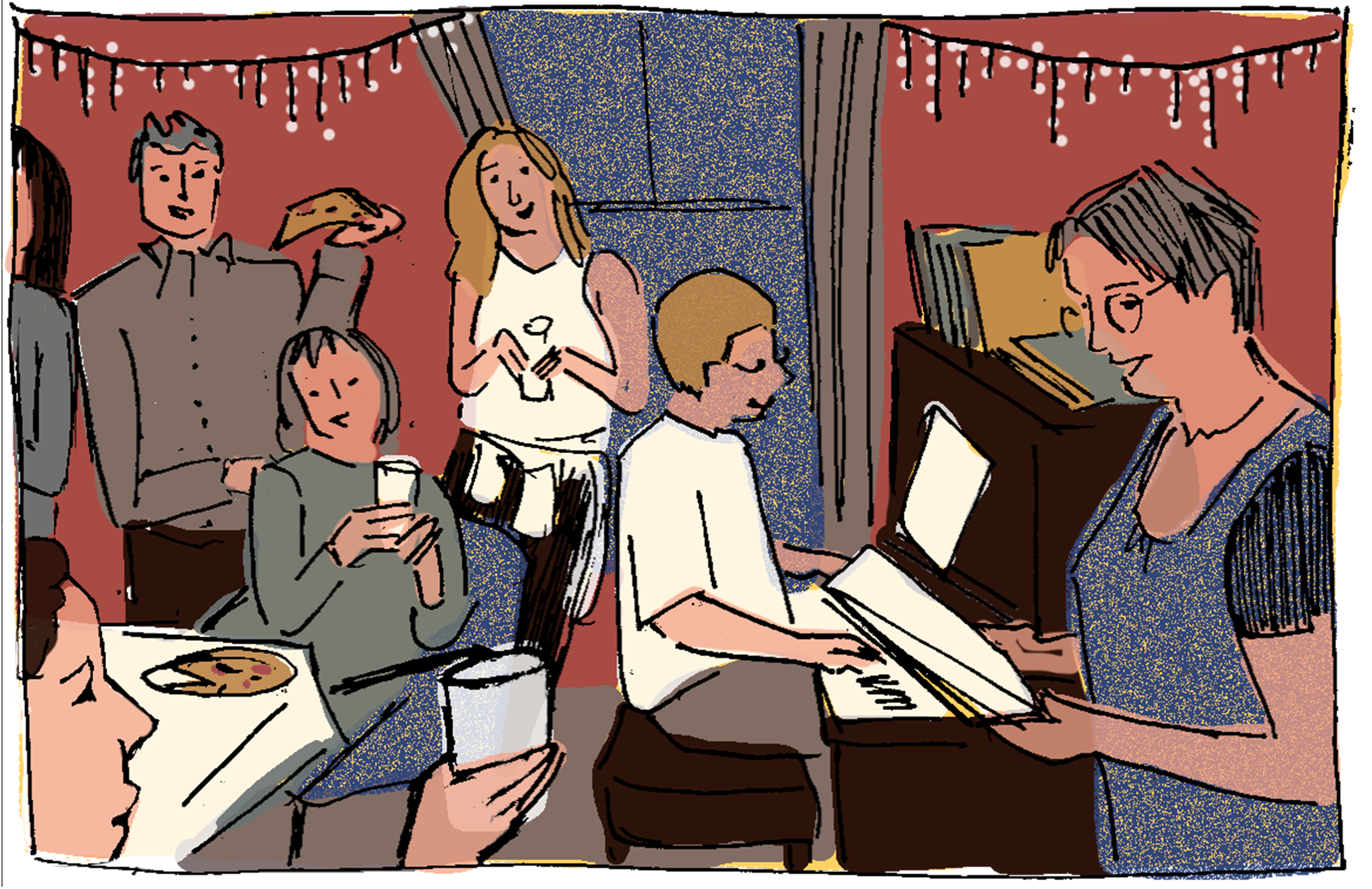
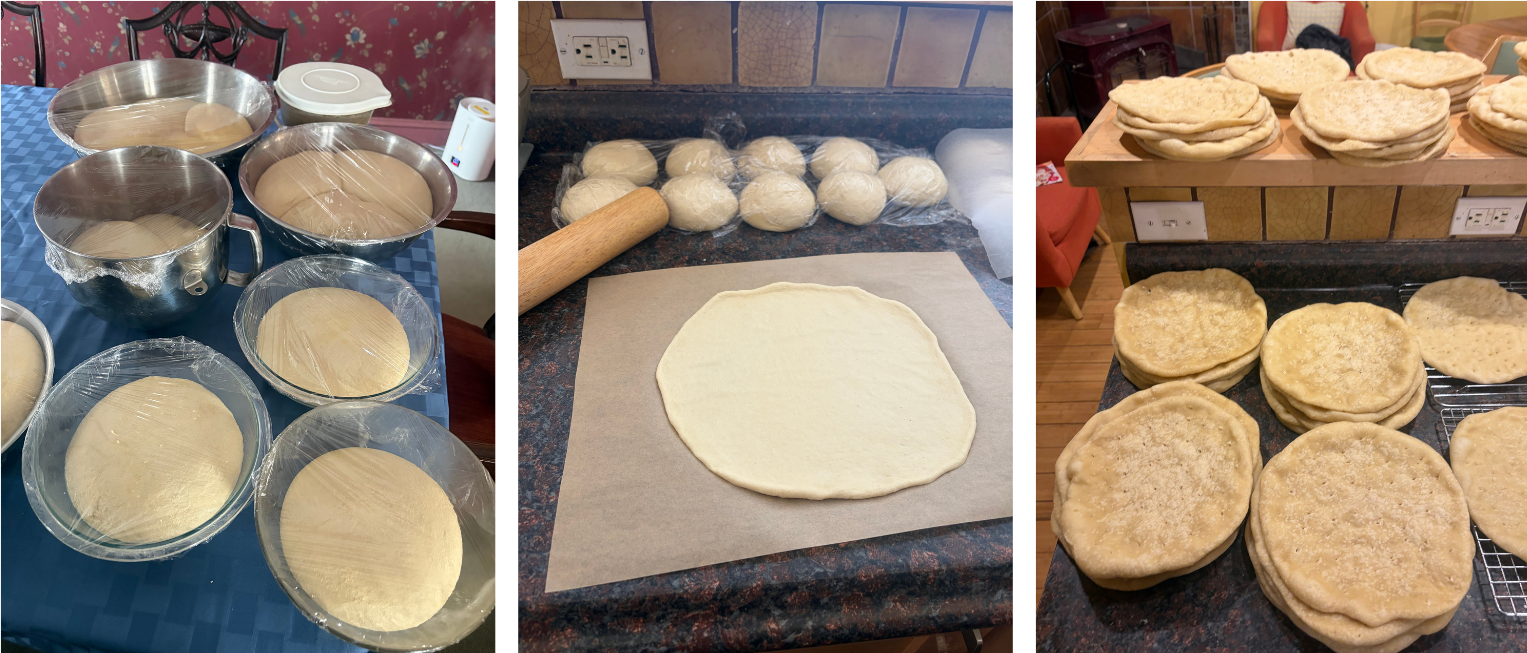
This year, the 20th year, there were 69 pre-baked crusts, 30 toppings to choose from, an expeditor,2 52 finished pizzas, an official reading, an official song, a traditional song, name tags, and a guest DJ. I took a week off from work to prepare,3 and I’m still trying to figure out what to do with the leftovers.
In other words, it’s a holiday.
In We of Little Faith, I contemplate the benefits people get from religion and ask whether nonbelievers can have them too.4 Things like moral guidelines, comfort in the face of death, churches, rites of passage, and prayer.
And holidays, which are more important than they might appear. A holiday presses “pause” on the year as it hurtles by. It insists that you take a moment to celebrate what you might otherwise fail even to notice, whether that’s friends or food or freedom or God’s love.
As an atheist, that last one eludes me, which means all religious holidays exclude me. I can take part, of course, and I do: My family faithfully shoulders the annual responsibility to fry something for Chanukah, and we put up a little last-minute Christmas tree and exchange presents, too. But the fun that wraps each holiday isn’t enough for me; I want the emotional gift that’s supposed to be inside it. A glimpse — through a clearing in the fog of everyday life — of some larger truth.
What would it feel like, I wonder, to celebrate Christmas with the joy and gratitude of someone God sent his only son to save? What would it feel like to believe that God parted a sea so that my ancestors could escape slavery — and that it was my job to retell that story, year after year?
I can’t know. Which is why, for me, no religious holiday can give me that full holiday feeling. At my parents’ house, we focus on the gift-free, God-free,5 food-forward holiday of Thanksgiving.
At our house, we go all out for the holiday we made from scratch.
If you too want to start your own holiday, I have a few tips.
(1) Steal someone else’s. A time-honored method! And often the thieves don’t even clean up after themselves, leaving bunnies and eggs from an ancient Germanic spring holiday to decorate Jesus’s resurrection . . . and confuse children everywhere.
Or (1b) seize on an annual event. We used to observe School’s Out, with fries, nachos, and margaritas. A friend says her family has a holiday called The Switch, celebrating the moment when (winter) scotch drinking turns to (summer) gin.6 You can use tax day, election day, the day the town pool opens. What does your family do every year like clockwork but without fanfare? Fanfare it!
(2) Define your celebration. Branding is important — naming is essential7 — but so is mission. What does your holiday celebrate? The coming of summer? Freedom from responsibility? Frivolity and glamor? The joy of making things from scratch?
(3) Establish holiday foods. Think latkes for Chanukah, King Cake for Mardi Gras, dates for Iftar. Your tastebuds should be prepared to celebrate, and your brain should start to associate that particular food with your holiday. Since pizza is gloriously common, the holiday part is the crazy number of toppings from which to choose.
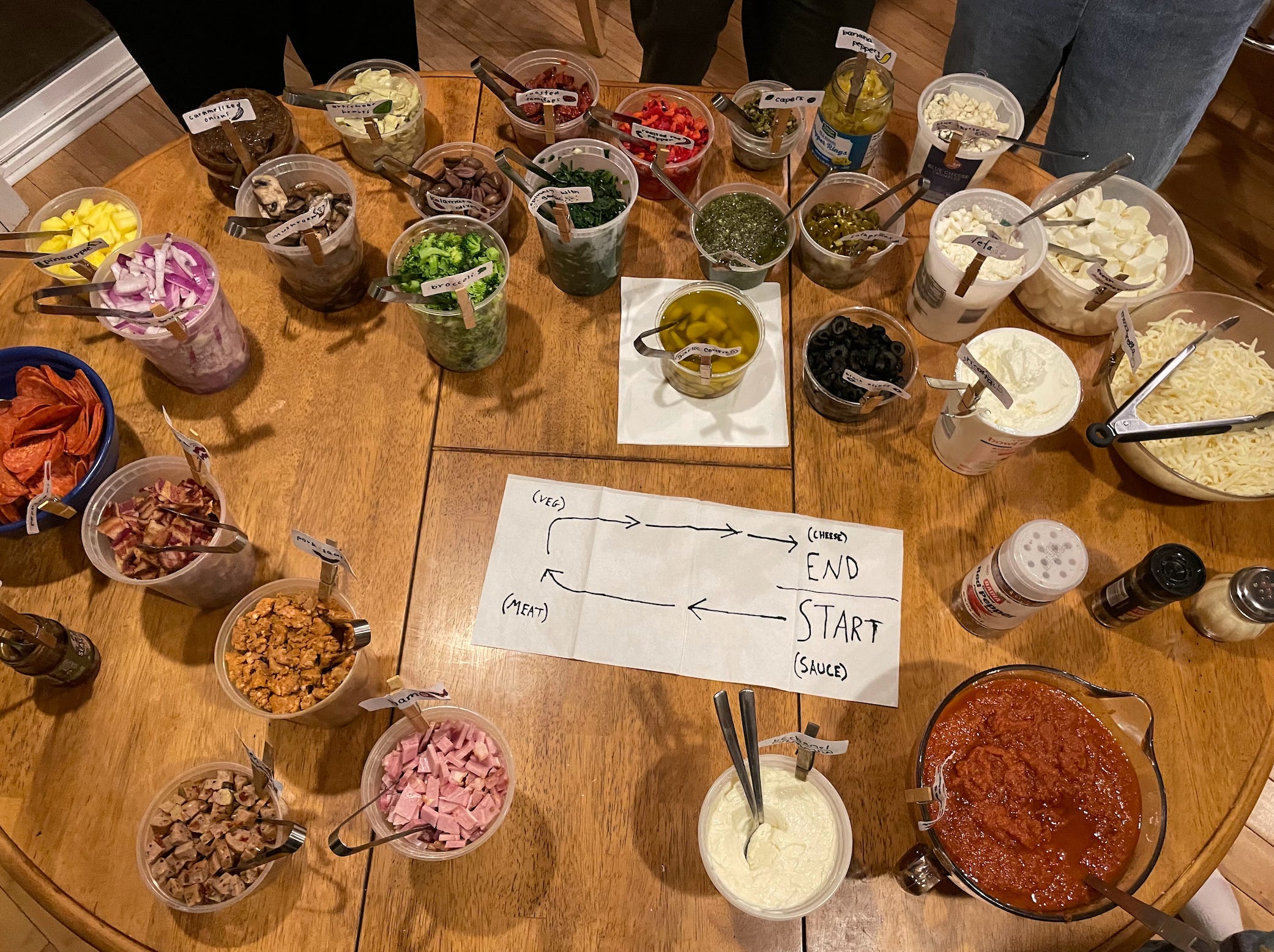
(4) Overdo it (extravagance). See above. We spend easily a month’s grocery budget8 and a week of errands gathering all the food and drink.9 There must be too much. Like, pies-at-Thanksgiving too much. Like, Mardi-Gras-drinking too much. Or, if you’re attempting an abstinence holiday, go over the top with Ramadan-levels of giving stuff up. At some point, you should survey what you’ve wrought and mutter, “This is absurd.”
(5) Overdo it (effort). You know how once a year people install lights; cut down and decorate a tree; buy and wrap presents; hang stockings from their mantle and fill those with presents; convince their children a stranger in a red suit has brought even more presents; bake dozens of cookies; and make a big special dinner? That’s the kind of energy we’re looking for.
Finally, the most important step. Really, the only important step:
(6) Commit. The problem and the joy of the scratch holiday is that it’s only a holiday if you decide that it is. That’s it. It’s an act of will, an act of willfulness even, and one that must be repeated year after year.
Last year we had a crisis. Snow was predicted10 so my parents, early and enthusiastic IPD celebrants, decided not to make the drive up from Virginia. Although the kids would be able to get here in time from Boston and New York, it looked like they might get stuck here. Depending on the storm, local guests might even opt to stay home the night itself. So — we asked ourselves a week before the party — should we postpone? Should we pick a date in March instead? February 9 was an arbitrary date, anyway, arbitrarily celebrated on the nearest Saturday. We could just pick a new date.
But, we decided, we couldn’t.11 IPD is “real” only because we insist that it is; for it to survive it must be as immovable as the Solstice. A true holiday happens every year at the same time, whether it’s convenient or not, whether it snows or not, whether or not anyone shows up. A holiday that can be postponed is just a party.
When I featured International Pizza Day in my chapter on holidays, my editor objected. He thought I should focus on a holiday that celebrated something important, like science or revolution or charity, not something frivolous, like pizza. And when I told my friend Ben a couple of weeks ago that I wanted to write a love song that had something to do with pizza, he gently suggested I should not be afraid to feel my feelings and “write about what matters” to me.
Guys, I know pizza seems unimportant, but that’s why I love to celebrate it. It’s as humble as it is common. Even the most renowned pizza makers in the world aren’t that nowned, and according to my research, the most expensive pizza12 by the world’s top pizzaiuolo13 costs 19 euros.
You could make your holiday about something people generally agree is important. To appease my editor (and just in case he was right), I put something like that in the book: “Make up a family tradition for Pride Month!” I think that would be a beautiful way to express and reinforce your values.
But I prefer picking something that seems unimportant and then investing it with import. So that as we push pause every year on a Saturday near February 9, we rejoice not just in our friends and family and food and scratch cooking but also in the collective decision — the collective effort — to make our lives meaningful, filling, and delicious.
It doesn’t just happen — in holidays, or in life. You have to make it so.

I.e., there was no actual strike zone involved.
In a restaurant, the expeditor is the person who brings the orders to the cooks and then makes sure the dishes are ready to go out. For the past few years, it’s gone like this: I stand at the oven, maneuvering pizzas onto hot clay tiles, then up to the broiler, then out to the cutting board, while a friend stands by my side accepting the uncooked pizzas from each guest, moving the pizzas forward in line, and keeping straight which pizza is whose. He’s the reason we haven’t had an oven fire lately, or delivered a pizza to the wrong person.
This is why subscribers got a hot cocoa recipe in their inboxes instead of an essay.
Short answer: All but one, yes. For the longer (but still concise) answer: Read the book!
Not in its origins, perhaps, but definitely in our celebration.
Switching base liquors was annual injunction her grandfather took very seriously, so The Switch has also become a celebration of him. That happens with holidays: They take on new meaning as the years pass.
In addition to International Pizza Day and its acronym, we have IPD’Eve and Do-Over Night (a.k.a. The Day of Regret), when anyone still here gets to make the pizza they wish they’d made the night before.
OK, all right, we don’t budget, but if we did . . .
The philosopher Josef Pieper argues in In Tune with the World: A Theory of Festivity that a true holiday requires sacrifice — akin to an ancient animal sacrifice or a medieval village’s sacrifice of a day’s labor. It should cost.
Somehow snow had never before threatened our mid-February upstate New York holiday. Miracle? You be the judge.
We didn’t. The kids came home. The party was smaller than usual, but, vibrating as it was with a buzz of defiance and risk, perhaps slightly more raucous.
Truffle, of course.
Francesco Martucci of I Masanielli in Caserta, near Naples. Note: Upon completing this investigation, I suffered a brief, dizzying moment of midlife questioning. Why am I not in Caserta this very minute?
Kate, that is a truly absurd amount of pizza dough!
The most expensive pizza I ever had was about 8 years ago at OTTO Enoteca in NYC (owned by Joe Bastianich and Maria Batali, and sadly now closed. It was white truffle, mozzarella, guanciale with a fried egg in the middle, and it was DIVINE. I think it was about $45.
I just looked at that Italian pizza menu, and that Green Truffle pizza sounds AMAZING. When do we leave for Caserta??? ;)