

Working Out Without the Mean Girls
can exercise be divorced from diet culture?
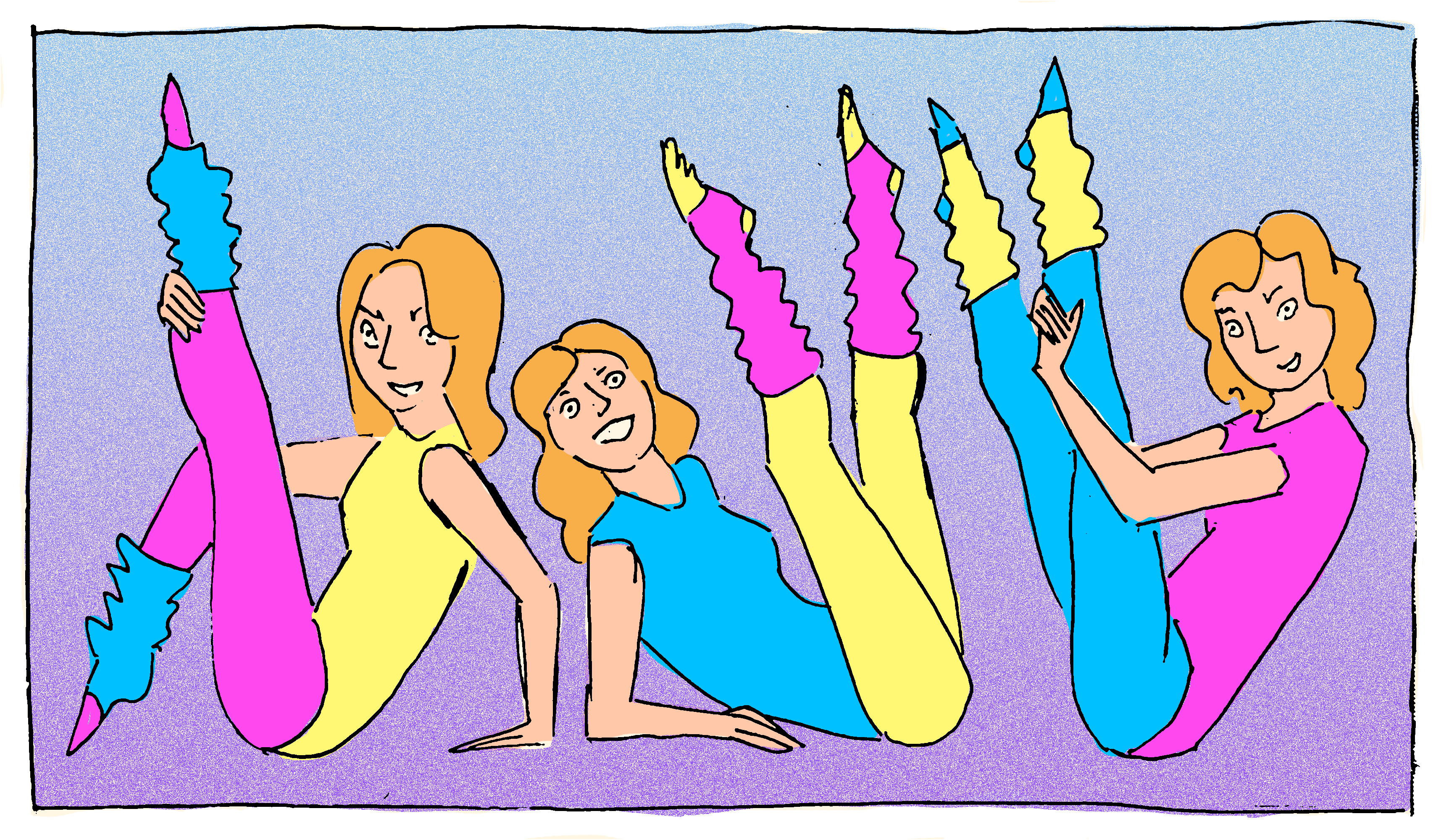
For most of my life, the goal of exercise was to get in shape. By “shape” I refer of course to the slim, flat-bellied form sanctioned by the fitness industry, the fashion industry, and Hollywood, a trio of mean girls who handed me the Jane Fonda Workout Video when I turned 12, before collapsing in giggles behind my back.1
I can still hear them cooing, “You can lose 10 pounds by summer,” flattering my willpower while insulting my body. But at age 56, I’m somehow starting to tune them out.
Maybe it’s a fool-me-twice situation, if “twice” means . . . an astounding sequence of exercise books and DVDs with such toxic content I cannot in good conscience donate them to the library.2 Maybe it’s reading Virginia Sole-Smith on battling diet culture and Casey Johnston on lifting weights. Maybe it has something to do with raising a daughter or going through menopause.3 Or maybe it was Kim.
Kim is a fitness instructor who teaches a weight training class at my gym. And yes, I did join that gym with the intention of losing 20 pounds, a goal endorsed by the buff 20-year-old who signed me up. Some trainers there motivate their classes with specters of bikinis, threats of summer, disgust at flab. But Kim was different. She refused to link exercise to looks. To get us through our arm workouts, she asked us to imagine not a situation in which we might have to wear a tank top, but one in which we might have to carry a baby and a bag of groceries.4
She ended every class with a pep talk about loving what our bodies could do right now, no matter how they look or how much they weigh. No matter what they used to be.
Inside me, the mean girls smirk. Whatever, Kim.
But in the past couple of years, I gradually stopped going to the gym to lose weight, and I started going to be in Kim’s class. On days when I was feeling tired or overwhelmed with work, I said to my husband, if Kim weren’t teaching, I wouldn’t go.
But why not?
Evolutionary biologist Daniel Lieberman writes in Exercised: Why Something We Never Evolved to Do Is Healthy and Rewarding that “engaging in voluntary physical activity for the sake of health and fitness is a bizarre, modern, and optional behavior.”5
When we’re not required to use our bodies for work or play, people generally try to avoid expending energy; we always have. Lieberman describes how even hunter-gatherer tribes do a heck of a lot of sitting.6 But their way of life requires them to be roughly 12 times more active than the average American or European, whose jobs are increasingly sedentary and whose lives are filled with labor-saving devices such as cars, elevators, washing machines, and Roombas.
So though it’s normal to want to sit, our bodies need a certain level of exertion, without which we are likelier to die sleep badly, suffer depression, risk injury, and die young. “Epidemiologists have calculated that [150 minutes of moderate exercise and two weight training sessions per week] will reduce my risk of dying prematurely by 50 percent and lower my chances of getting heart disease, Alzheimer’s, and certain cancers by roughly 30 to 50 percent.” Lieberman devotes much of his book to entertaining, data-rich explanations of how exercise increases health and longevity.
Unfortunately, understanding the benefits of exercise doesn’t make us do it. Lieberman cites a 2018 survey of U.S. adults that reports that almost all adults know exercise is good for them, but 70 percent still say they never do it.
For me, the more persuasive argument is that exercise makes me feel good: joints oiled and muscles alive, head clearer and body more present. You would think that would be motivation enough. But, other than Kim days, I could easily spend the whole day at my computer until I finish my work and join my husband on the couch.
I know that because just a month ago, Kim got another job. She still teaches, but not when I can go.
Desk. Couch. desk. couch. Ugh.
Sensing an opening, the mean girls circle. They find me on social media and in the margins of Google searches and begin their seductions. Don’t you want to exercise for just 7 minutes a day and go from this (lumpy-pillow body) to this (smooth coffee-table body) in a month? Did you realize that to lose belly fat as a menopausal woman you must work out in a completely different way that will be revealed to you if you click this link?
You do know, don’t you, that a body with a belly is incorrect? We start Monday.
Help me, Anna Maltby!
I discovered Maltby on Virginia Sole-Smith’s podcast Burnt Toast. She’s a health journalist and personal trainer with a newsletter called How to Move, which offers body-neutral advice and workouts7 suffused with a kind and approachable intelligence. If anyone could be trusted with my anti-diet, post-Kim exercise reset, it was her.
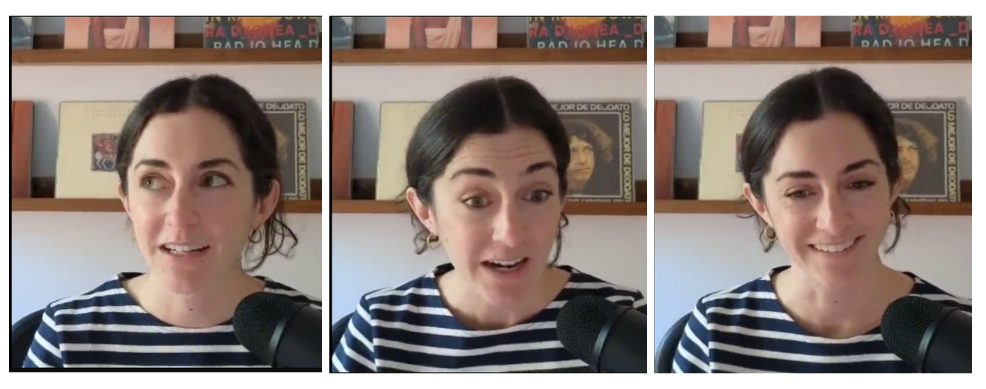
She didn’t want to tell me what to do, though. She said there’s a prescriptive, personal trainer side of her that could tell me what to prioritize. But “the bigger part of my brain is the one that’s like, we are all such different people, and we all have such different situations and histories and goals and access and abilities . . .”
Whatever, Anna!
I knew she was right, but I craved direction. One of the things I missed about Kim was letting her figure it all out for me.
Some people prefer it that way, said Maltby. To them, exercise is just a chore they don’t want to think about, like brushing their teeth. Wait — Is it like brushing teeth? I asked. Is it necessary? “Exercise is not a moral obligation,” she said.
You don’t have to, you know, nobody has to. To me, it’s hard to imagine living the kind of life I want to live and feeling the way I want to feel every day without it. But yeah, you don’t have to. (You should brush your teeth, though.)
There you have it folks, permission not to exercise. If you’re going to leave other people’s expectations behind, if exercise is going to be for you, that has to be step one: choosing to do it from a place of not having to.
I already know desk-to-couch days don’t make me feel good. So now what?
Maltby suggested starting with something personal: a focus on lowering your risk of the heart disease that runs in your family, for instance. But I’m afraid Today Me just can’t seem to worry about, I don’t know, my grandmother’s osteoporosis. Stupid, but true.
Then she told me I could build my exercise life around a goal I want to achieve or a skill I want to master. I was so used to thinking of goals in terms of pounds lost or abs revealed that I forgot I could aim for something measurable that, as Maltby put it, “doesn’t harm your mental health in some way.” She reminded me that when Sole-Smith did one of her 30-day strength challenges, she even put stickers on a little calendar to scratch that “I accomplished something” itch.
I wasn’t going to run a marathon (arthritic knees) or learn to rock climb (acrophobia), so what should I aim for?
That’s the question Maltby got me to ask myself.
I’d like to be able to swim for real, not just survive if I tipped out of a boat but do a clean crawl without getting my breath all mixed up.
I’d like to be able to serve a tennis ball, not just dink it into the correct box on the court, but place it, with force.
I’d like to be able to do a pull-up. Just one.
I’ve always wanted to do a back walkover. It’s ambitious, I know. (I’m 56! I was never a gymnast!) But I wouldn’t need hand-eye coordination or speed. I would need flexibility, determination, strength, and courage. And a plan, and enough days in a row (and stickers) to make incremental progress.
I can just about picture it.
If I don’t succeed, at least I’ll have chosen a kooky, personally inspiring exercise goal to replace the toxic, culturally determined one I am determined to reject. And think of all the groceries and babies I’ll be able to carry!
Kim will be so proud.
Yes, I realize I should be picturing men instead.
It’s like having controlled substances in my medicine cabinet and not wanting them to end up in the groundwater. They should have a town disposal day for Jillian Michaels workouts.
No, I cannot be more specific. I’ll just remind you that menopause involves such a total shift of mind and body they call it “The Change” — a euphemism born of squeamishness, to be sure, but evincing a certain level of respect. (In your face, puberty.)
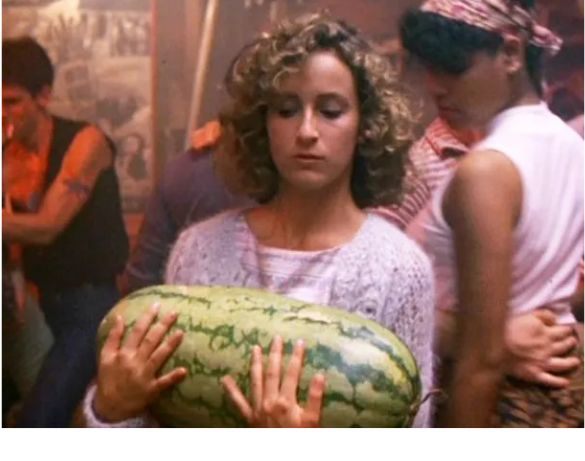
Or be Baby in Dirty Dancing, schlepping a watermelon to a party with the cool kids.
That’s exactly what I think whenever I drive past the barns on my way to the gym and wave to my husband in full, hay-hoisting sweat.
He studied (and cited other scholars’ studies of) the Hazda in Tanzania.
These are clear, humane, and remarkable from first glance because she works out in a T-shirt. Not body-hugging Lycra or a jog bra or a belted (!) leotard à la Jane Fonda. A T-shirt. NOTE: As a subscriber, I have a certain number of How to Move one-month subscriptions to give away, so let me know if you want one.
I love the analogy to controlled substances for the exercise books--we have to get them out of our system.
I’ve always considered a pull-up, which I can do well, and a pistol squat, which I cannot, the perfect pair of aspirational movements. My thus-far failed attempts to master the latter did, however (or so I’m convinced), enable me to recover from a potentially nasty fall the other day. An Algerian man who witnessed my miraculous return-to-vertical from a nearby car yelled out “sportif!” Exercise redeemed.