

Tiny Pricks
from my scratch pad
When I set out to write about craftivism for this week’s essay, I encountered an entire universe of people who use art and craft to protest injustice.

Which is art and which is craft? This is a topic for another day. I’m guessing we call it “craft” if it has evolved from a skill that was once the purview of the homemaker: needlepoint, knitting, sewing. Or perhaps we call a “craft” any product that is or was in any way useful: birdhouse, potholder, sweater, candle.
In any case, connotatively, “craft” is female, amateur, humble, domestic, and useful in an invisible way. “Art” is male, professional, ambitious, public, and useless in a fancy way. Art is uppercase; craft is not.
Those distinctions will surely get blurrier with time, and not (I’m sorry to say) because we’ll all get less sexist or elitist. Hyper-consumer capitalism has altered the utility metric — clearly it’s cheaper and faster to buy hats on Amazon, as I noted on Tuesday, than to make them oneself — and social media has made our domestic spheres public and visible.
I’m putting all this on my to-write list. But in the meantime, I want to introduce you to Diana Weymar, a woman I met who is combining all of it: art, craft, political activism, and, I’d argue, a singular kind of performance art.
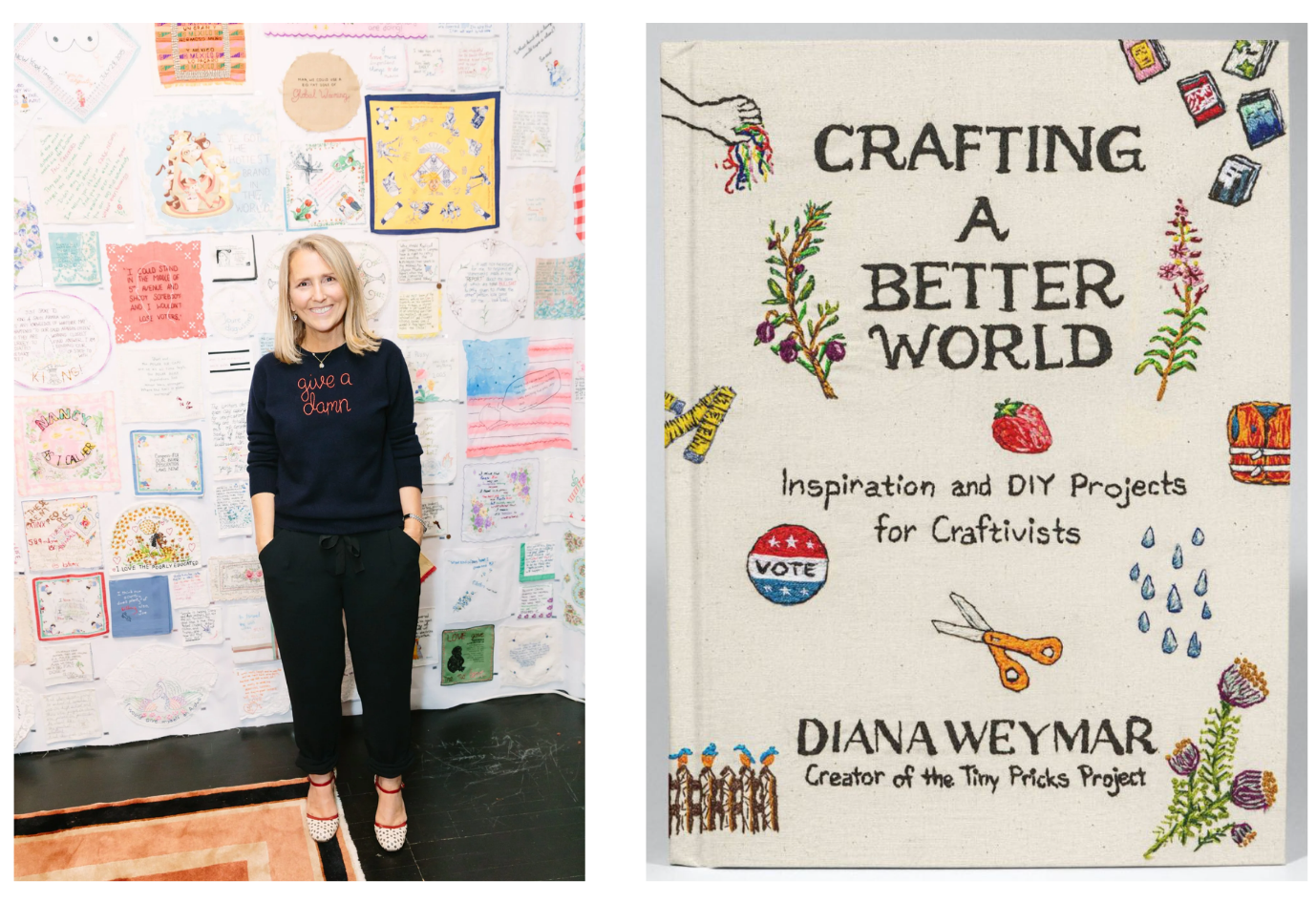
I found Weymar through her book, Crafting a Better World: Inspiration and DIY Projects for Craftivists, a cool little compendium of advice from her and a range of artists and activists. But what she’s most famous for is creating the Tiny Pricks Project.
The project started in 2018 when she was so annoyed at Trump’s assertion, “I AM A VERY STABLE GENIUS,” that she stitched the words into a needlepoint cushion cover from a stash of handed-down family textiles. When she was done, she felt like she’d scratched an itch.
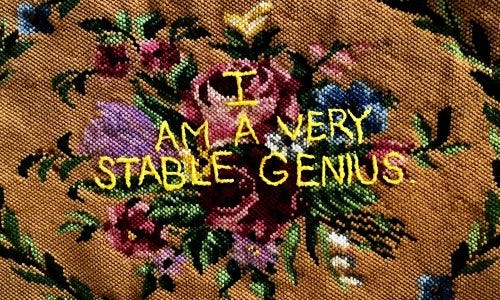
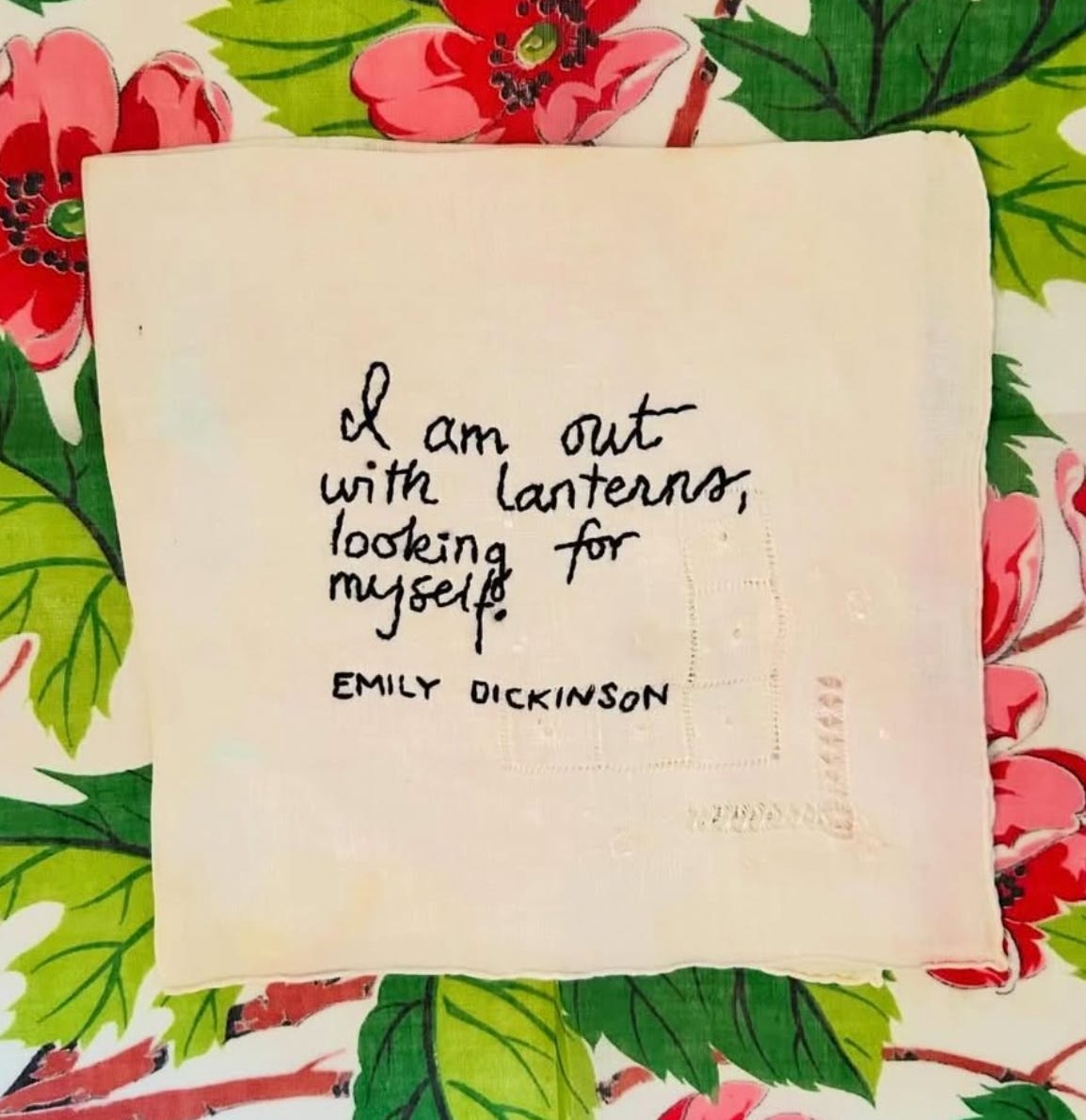
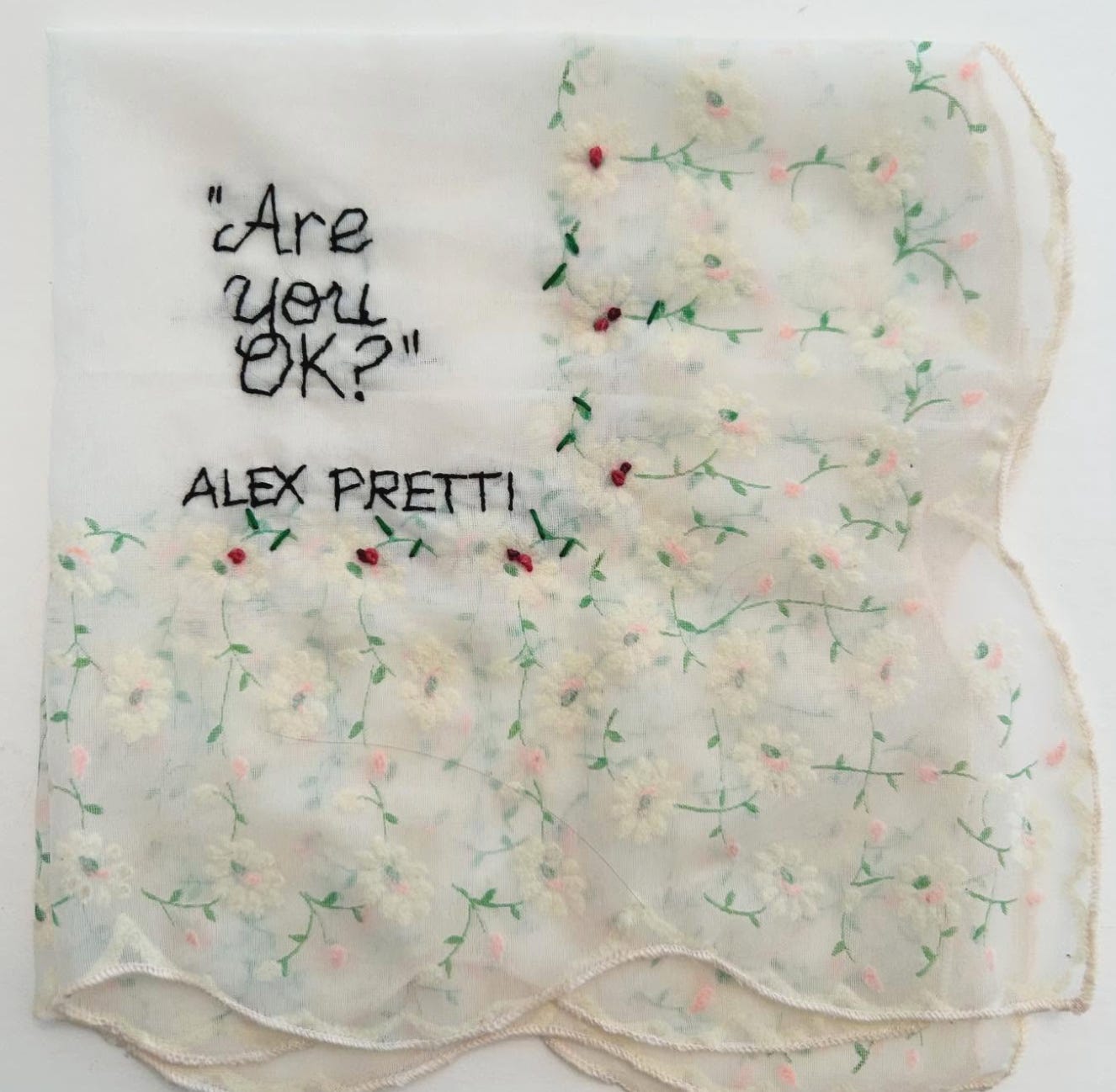
She took a picture of the piece, posted it to Instagram, and thus began a daily Trump-quote embroidery practice. She quotes him less now — the novelty of his inanity has worn off somewhat, all these years later, and with it the irony of carefully stitching his words as one would a treasured saying. Also, she said, “I don’t think he’s exactly the problem anymore.” But she still stitches a quote on re-used fabric, and posts a picture of it, every day. Quotes by politicians, but also pundits, artists, activists, and poets.
When we met by Zoom, Weymar apologized for stitching while we spoke; she’s always on deadline, stitching something inspired by the day’s news. I asked her about an idea that I kept coming across: that craftivism was “subversive” because it subverts expectations about both the medium and the maker. But she demurred: Combining embroidery and politics is natural for her, she said, and her project is so well established, it no longer shocks or surprises.
What it does, she said, is “document in real time” the moment that we’re in.
But isn’t everything is being documented these days? We are drowning in documentation. Her reply was something that, if I were a needlepointer, I would absolutely stitch: “We’re documenting everything but we’re looking at nothing.”
She said she had boxes of her late father’s letters — objects that she can hold. “Those actually live as documents. I don’t feel like anything lives as a document right now.” But her needlepoints do. Each makes tangible what Weymar has paid attention to since that first day in 2018. It creates a material record of what a single human being alive in the world today has been thinking about, curated at the pace of a mildly obsessive and very determined stitcher. Which is to say fast, but also slow.
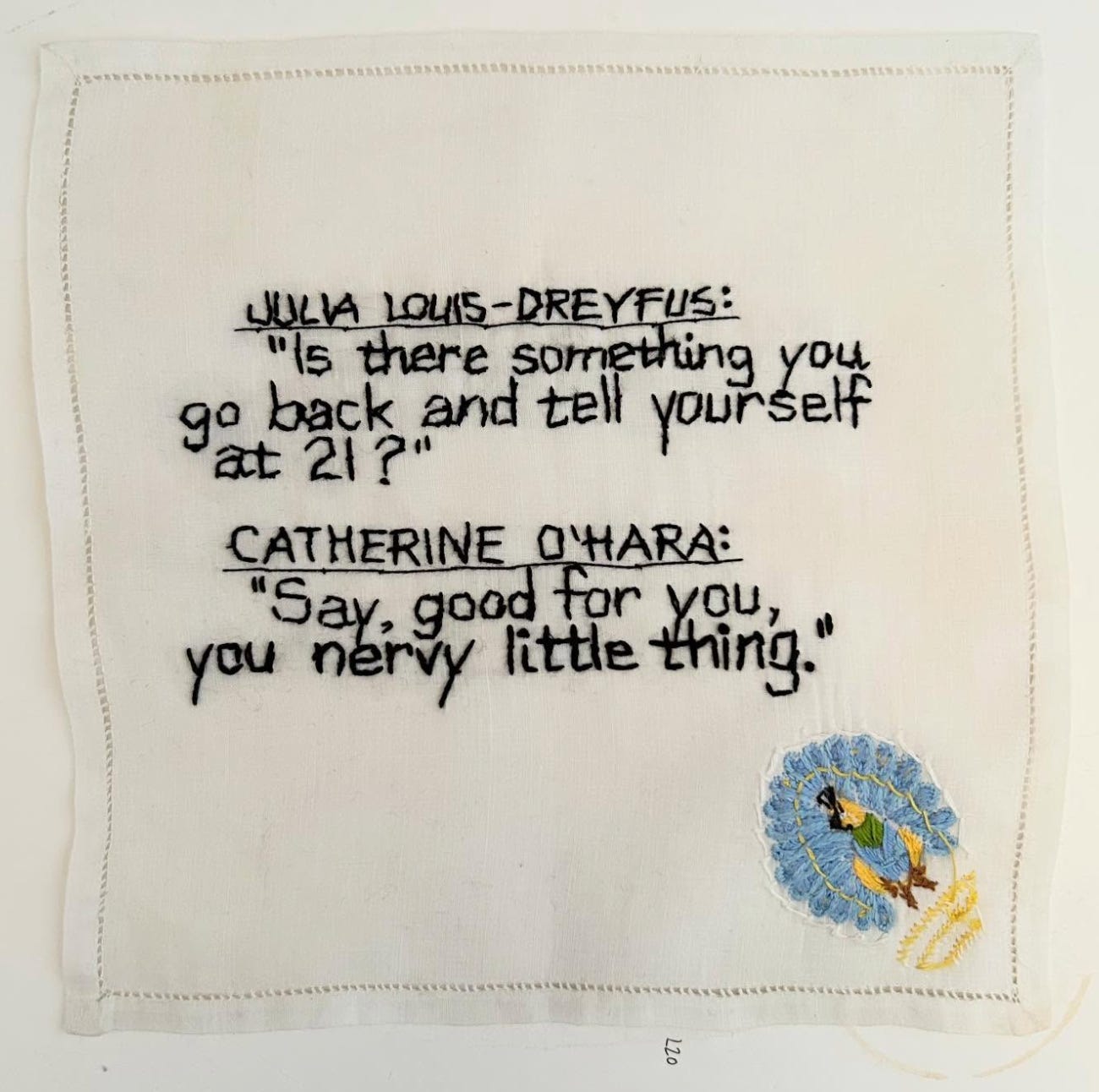
Needlepointing is partly just Weymar’s way of dealing with life in the Trump era. “Working with our hands to address the issues of our hearts can help,” she writes in Crafting a Better World. She told me: “When people feel helpless, it makes them feel better to do something or make something or even repost something that’s handmade.”
But it’s not just for now, and it’s not just for comfort. (Although that would be plenty.) It’s also for posterity, for history, for her kids.
“Stitching — or drawing with thread — leaves an imprint of the maker’s movements while unfolding, cutting, stretching, and molding thoughts,” she writes. “In a time of rapid communication, disposable objects, and the machine-made, craftivists and artists ask the question, ‘What does what we make say about who we are?’”
The Tiny Pricks Project now includes contributions from a community of stitchers around the world. But Weymar said, “The beauty of it is you can’t do it on a mass scale.” Even though the project is impressive in its scope, with more than 5,000 pieces and counting, relative to the great swirl of information around us, it’s still tiny. By definition, since each piece requires a human being’s time, effort, and attention, the project exists at a human scale.
Also by definition: It leaves a mark on the physical world for others to encounter. Tiny pricks that say, a fellow person was here.
Porgy Has Something To Say
It ain’t necessarily so, it ain’t necessarily so
That immigrant children are now our villains
It ain’t necessarily so
That no one believes the emoluments clause?
That we’ve shredded all copies of federal laws?
That indictments from Jack Smith are just a big myth?
No, it ain’t necessarily so.
You can live clean, not have any fault
And have no vice yet still be beaten by ICE
It ain’t necessarily so, that all truth is faux
No it ain’t necessarily so.
So start believing in those that ain’t thieving
We don’t have to give up or feel pent up
Fight against this incessant grafting with some creative crafting
Don’t be at home in the world of this showman
Arrest all those MAGA degenerates and their vile confederates
Put the small d in democracy and let’s end this plutocracy.
Thank you for introducing me to the concept of "craftivism," and also to the Tiny Pricks Project. I'm a gay male needlepointer. Drawing on the work of Joseph McBrinn in his book "Queering the Subversive Stitch: Men & the Culture of Needlework" (Bloomsbury, 2021), I'm having fun doing my bit queering the misconception that needlepoint, and all stitchery, is "woman's work." And I'm also having fun doing a bit of (mild) protesting through my series of NAUGHTY BOY NEEDLEPOINTS. Transforming often well known images from famous artists into the new medium of wool yarn on canvas, I aim to raise questions about the images and what we see when we look at them. Can an image really be all that "naughty" when it's stitched into a parlor cushion? And how much can the impact of an image be altered when transformed through the "feminine" craft of stitching - particularly when stitched by a man - and a queer one at that? (Not claiming anything profound - but having lots of fun.)